

Mash for Horses – Easily Digestible Concentrate Feed

"Every horse eats mash," is a phrase you hear very often among horse people. If bad-tasting medications need to be given, or a horse refuses its feed at a competition, preparing a mash is often the first solution. Veterinarians also recommend feeding mash for stomach ulcers, after colic surgery, for dental problems, or for older horses. Usually consisting of flaxseed, bran, apple pomace, oat and corn flakes, it is not only appetizing and palatable but also quick and easy for a horse to digest.
What Is Mash?
Mash is the English word for a stage in alcohol production, such as fruit mash, meaning fermented fruit. In times of war, mash was used as animal feed, from which today's mash gradually developed. The traditional recipe is a mixture of wheat bran, flaxseed, grain, and livestock salt, which is mixed hot and fed lukewarm after a longer cooling phase. Due to its positive effect on digestion and the stomach, it is classified by most feed manufacturers as a dietary complementary feed.
What Does Mash Contain?
The traditional basic recipe is still included in most current mash mixes, though many ingredients can be varied and adapted for specific groups of horses. For example, grain-free mash can be used for horses with metabolic disorders, or acid buffers can be added specifically for horses with severe stomach issues. Adding herbs is possible and can enhance both the palatability and individual effects of the mash.
Wheat Bran
Wheat bran is the residue left over when grinding grain, i.e., the husk or outer layer of the wheat kernel. Wheat bran has a swelling and mildly laxative effect and is therefore popular for dietary purposes. Horses enjoy eating wheat bran, and it contains a good amount of natural mucilage, minerals, and trace elements such as potassium, magnesium, copper, and more.
Oats or Grain
Other components of mash can be grains in various forms, such as whole oats, crushed oats, or oat flakes. The starch in, for example, oat flakes is a good energy source, shows high small-intestine digestibility, and, compared to other types of grain, contains a high amount of unsaturated fatty acids and mucilage.
Maize
Untreated maize or maize kernels have a strongly linked starch structure that is very difficult for a horse to digest in the gut. When maize is heat-treated, the rigid starch structures are broken down. Small-intestine digestibility after heat treatment, as with flaked maize, is significantly higher, almost as high as with oats. Due to their high small-intestine digestibility, maize flakes are very well suited as an energy source, stimulate appetite, and do not burden digestion.
Oilseeds such as Flaxseed or Soy
Oilseeds and their residues are very rich in fat and protein. Mares in the lactation phase have a high protein requirement, which is often supplemented in addition to roughage and pasture with extraction meal from flaxseed, soy, or rapeseed. Mash therefore also typically contains a larger proportion of oilseed residues such as soybean meal, since this has a high content of essential amino acids such as lysine.
Flaxseed, flaxseed meal, or flaxseed cake have a high proportion of mucilage, which has a (empirically) demonstrated positive effect on protecting the stomach lining in horses. Flaxseed is also known as a source of omega-3 fatty acids and is likewise a high-quality protein source.
Apple Pomace
Apple pomace is a residue from apple juice production. It therefore contains significantly less sugar than the raw apple and is very rich in crude fiber. Among other things, its dry matter contains pectins, which are used to protect the stomach lining in horses.
Structural Fibers
For horses that need to be fed a low-starch, low-grain diet, so-called structural mash uses ingredients that are very rich in crude fiber. These are usually dried and chopped grasses and herbs, which make up the largest component of those feeds.
When Do I Feed Mash?
Mash is not a concentrate feed meant for permanent feeding, but it can generally be eaten by any horse, for example as a special treat now and then. Due to its easy digestibility, its mucilage content, and its high energy content, mash is particularly suitable for the following situations:
- to stimulate appetite
- weight gain
- times of particular strain, such as competitions or demanding training, lactation, stress, stable changes, and more
- for recovery after surgery
- for horses with stomach issues or stomach ulcers
- in horses with dental problems
- in older horses with already limited chewing ability
Please be careful with horses that have metabolic disorders or horses that need to be fed a starch-reduced or sugar-reduced diet! In this case, a grain-free variant of mash should be fed or included in the daily ration calculation.
What should be considered when feeding mash?
Due to the increased phosphorus content in wheat bran, continuous feeding can disrupt the mineral balance in the horse and, for example, lead to the formation of enteroliths. Therefore, it is recommended to either feed it only for a limited period or to add extra calcium to the mash.
Wheat bran contains phytic acid, or phytate, which occurs in the grain husks to defend against herbivores and pests. Phytate can hinder the utilization and absorption of minerals in the small intestine, which is why continuous feeding every day or throughout the whole year is not recommended.
How do I feed mash to my horse?
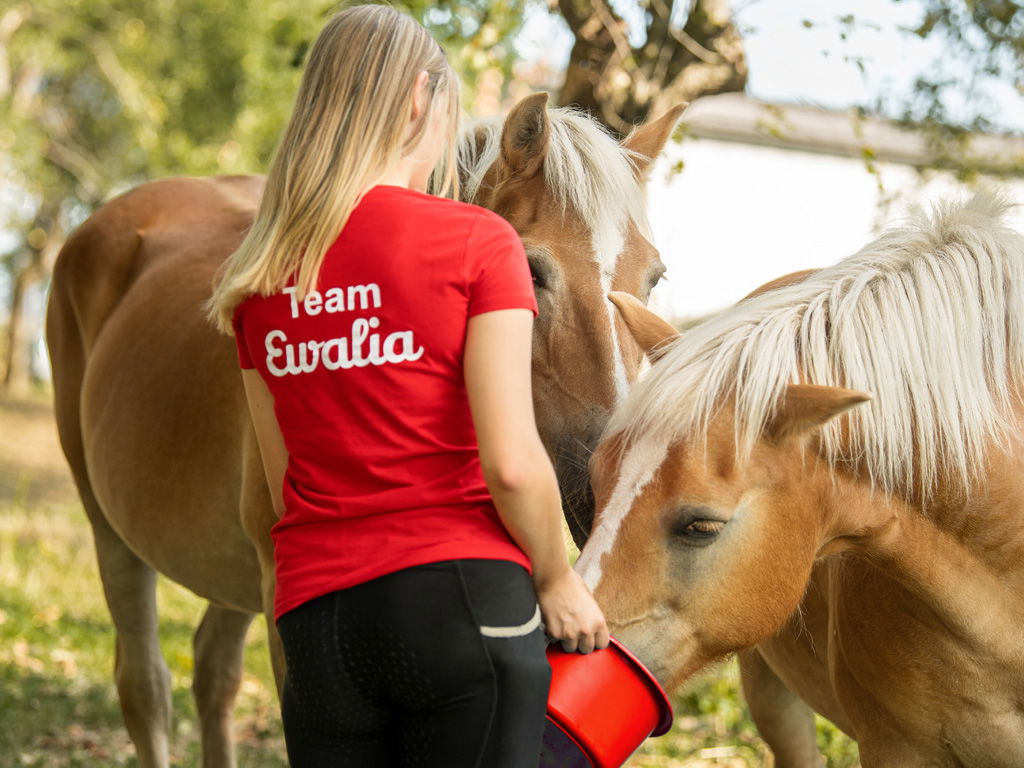
Mash is usually mixed 1:1 with hot (not boiling) water and left to stand, ideally covered, for about half an hour. This resting time serves two purposes: it allows the mash to cool down (please only feed it lukewarm, otherwise there is a risk of burns!) and it activates the mucilage of the various ingredients.
You can test whether it's lukewarm directly with your hand, but stir it well first! Small areas of higher heat often form in the feed bucket that you might not notice without stirring.
It's best to use up mash quickly and not store it unsealed in the feed room. Moisture has a big impact on feed spoilage and should therefore be avoided at all costs.
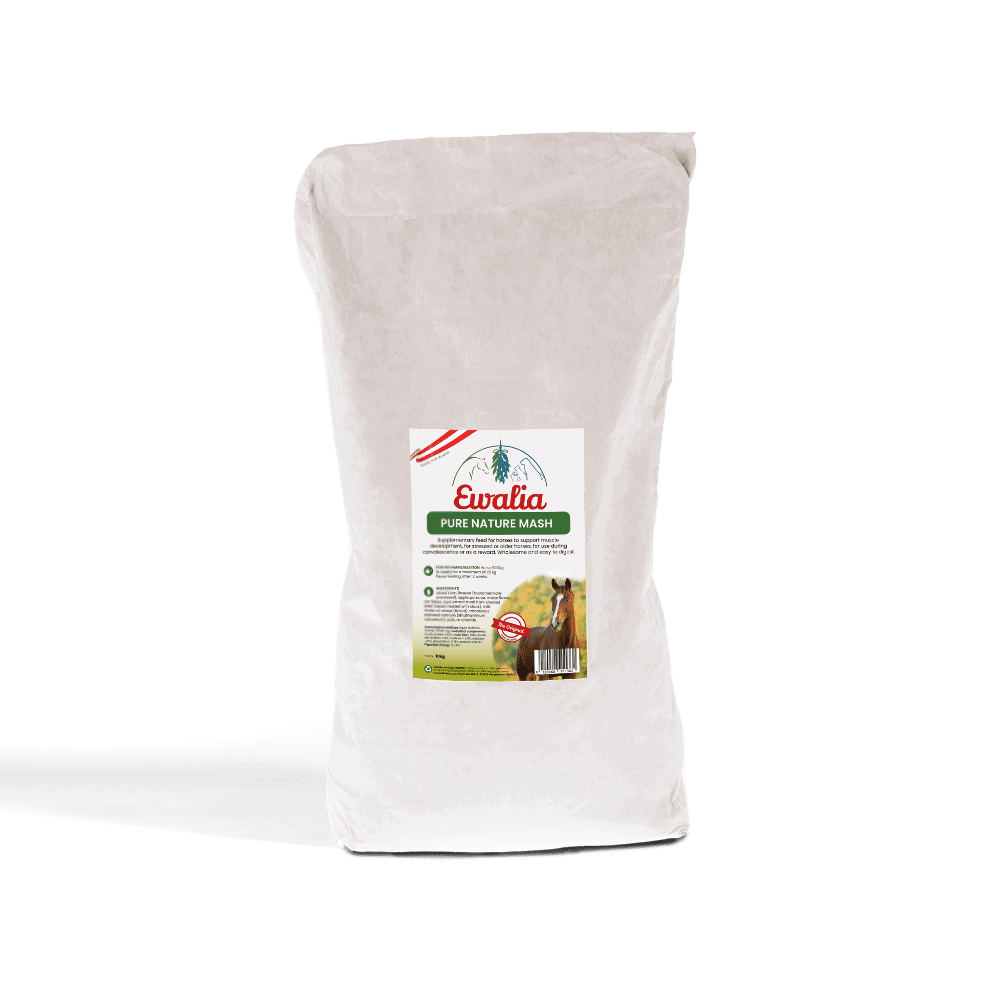
What is special about Ewalia Natur-Mash?
Ewalia Natur-Mash is especially valuable for horses with digestive and stomach issues. The added Icelandic calcified seaweed (seaweed-derived calcium) serves both as a natural acid buffer and as a natural source of calcium, balancing the calcium-phosphorus ratio in the diet. The balanced mixture can be combined with the Ewalia herbal Liquids such as Gastric Liquid, Gut Vital Liquid or others, and therefore contains no additional herbs.
Milk thistle oil supports the liver and is an ideal addition especially for horses with stomach problems. The apple pomace contains enough pectin to support the stomach lining. Soybean meal, flaxseed, oat flakes and thermally treated corn flakes have a very high small intestine digestibility, so they barely burden digestion and provide the body with plenty of energy in a simple way.
Ewalia Natur-Mash can be fed alongside the treatment of gastric ulcers, i.e. at the same time as a proton pump inhibitor (omeprazole). The palatability and warmth of the mash help horses with (healed) gastric ulcers regain confidence in eating without pain.
Author: Bianca Becker-Slovacek
Our products are not medicinal products.
They are therefore not intended for the treatment of pathological conditions or
associated symptoms. Feed products as well as care products serve
exclusively to support and care for your healthy horse. For the
treatment of an illness or other therapy recommendations,
only your veterinarian or animal naturopath is responsible.
Related products