















Coughing in horses
.webp?width=3000)

- supports the respiratory tract
- with expectorant, anti-inflammatory & soothing herbs
- for easier breathing
In horse circles, it's said that with chronic respiratory issues there's hardly any chance of improvement anymore. So does that mean resigning yourself to a horse's chronic cough? Not necessarily, because there are many ways to address respiratory problems! Below is a summary on the topic of the lungs, prevention of respiratory problems, and the feeding of natural herbs to support horses with coughs.
How do I recognize respiratory problems in my horse?
Some lung problems are noticeable both at rest and under exertion. Even at rest, the affected horse's respiratory rate can be increased. The horse literally pumps/presses the air out of the lungs until, in severe, chronic lung diseases, a kind of muscle groove, the so-called "heave line" becomes visible externally. Purulent nasal discharge can be another sign of an infection in the respiratory tract.
Signs of possible respiratory problems:
- Nasal discharge: one- or two-sided, that is not clear (yellow, purulent)
- Clear nasal discharge: that persists over a longer period
- Increased respiratory rate: over 15 breaths per minute at rest
- Coughing: sporadic to frequent
- Irritant cough: with even low levels of dust
- Coughing: when the larynx is stimulated
- Decline in performance: depending on severity and discipline
- Longer recovery phase
- Pathological breathing sounds
- Fever
- Shortness of breath and difficulty breathing
Not all factors occur at the same time. There are indeed disorders of breathing that are genetic or congenital. The most common diseases of the bronchi and lungs are acute bronchitis and, subsequently, chronic obstructive bronchitis (COB). According to Gerber & Straub, the latter is divided into two different diseases.
IAD (Inflammatory Airway Disease) can have unclear or multifactorial causes, can affect all age groups, and shows a specific clinical and cytological (blood count) disease pattern. It is classified as mild-grade COB.
Moderate to high-grade COB includes RAO (recurrent airway obstruction). Those affected are usually older horses over 7 years of age. These show asthma-like symptoms as well as specific inflammatory markers. Gerber & Straub also describe disease patterns that show hardly any coughing fits or only slight coughing. Those cases are characterized mainly by a marked decline in performance and require a bronchoscopy to determine the disease. A definitive diagnosis is made by the veterinarian you trust!
❓IAD (Inflammatory Airway Disease):
an inflammatory respiratory disease in horses that mainly affects the lower airways.
❓RAO (recurrent airway obstruction):
stands for recurrent airway obstruction – also known as heaves.


What are the causes of diseases of the bronchi and lungs in horses?
Generally, the factors that lead to respiratory diseases can be divided into exogenous (external) and endogenous (internal).
- Mechanical: from dust or smoke
- Thermal: from stable fire or cold
- Chemical: from ammonia
- Infectious: from viruses, bacteria, fungi and/or parasites
- Immunogenic: from fungi and mites
- Cardiovascular problems
- Toxins (poisons)
- Metabolic derangement
- Metastatic: from a tumor or an infection
However, the most common causes lie in suboptimal housing and feeding of horses. Poor ventilation in stables, elevated ammonia concentration combined with bedding or roughage of lower quality, usually result in too great a burden on the immune system and the lungs. Acute bronchitis is a possible consequence. If this is not fully healed, the inflammation can become chronic (IAD).
Coughing, nasal discharge, or a decline in performance should therefore not be taken lightly!
Conclusion - Respiratory Tract
Respiratory diseases in horses are often due to external factors such as dust, poor stable hygiene, or inferior feed. Symptoms range from occasional coughing to chronic, severe lung diseases. Early detection and targeted treatment, combined with optimal housing, ventilation, and support from natural herbs, can contribute to improvement in the long term – even in chronic conditions. Prevention and consistent care play a decisive role in the health of a horse's lungs.
How can respiratory problems be prevented and the affected horse supported?
Prevention is the best medicine! The housing conditions for horses should be optimized and the basic feed should be of the best quality. Regular deworming, strengthening the immune system and metabolism, as well as feeding tailored to needs, including mineral supply, form the basis for a healthy horse.
Preventively relieving your horse's respiratory tract
Ride more often in the outdoor arena, or only after watering the indoor arena floor!
Here too, make sure it is of the best quality! In particular, RAO horses should not come into contact with allergens such as feed mites or mould spores. You can also steam the hay (note: please feed it immediately after steaming!) or soak it completely in water for 10 minutes (note: please do not leave it in water for longer than 30 minutes, and feed it right away!).
If your horse is not kept in an open stable, an outdoor box or paddock box with plenty of fresh air is recommended. If this is not possible, make sure the stable is ventilated and mucked out frequently. Daily turnout not only improves the situation for your horse's lungs, but also provides variety, exercise, and joy for your beloved companion!
Limit stable work (mucking out, feeding, bedding down) to times when the horses are out in the paddock or outside the stable. Dust stays in the air for quite a while after sweeping, even if you can't see it. You can water the stable aisle before sweeping to bind the dust particles!
Muck out several times a day, or consider a solution (bedding with natural composting, designated urination spots) that produces less ammonia formation.
Make sure the bedding is of high quality (dust formation from mould is particularly dangerous), or switch to low-dust bedding types such as straw pellets or forest floor bedding.
"Cough herbs" - herbs to support horses with coughs


To support the upper respiratory tract, herbs containing active compound groups such as saponins, flavonoids, mucilage, and essential oils are particularly suitable.
- Saponins: increase the expectoration of mucus and make it thinner (making coughing up and loosening mucus easier). They strengthen the bronchial muscles and the movement of the ciliated epithelium.
- Mucilage: are attributed antiphlogistic (anti-inflammatory) and soothing effects
- Flavonoids: have been observed to have, among other things, antiphlogistic, antimicrobial, antiviral, antioxidant, and spasmolytic (expectorant-promoting) effects.
- Essential oils: also have an expectorant, antiseptic, and anti-inflammatory effect
A number of herbs meet the criteria mentioned above and additionally have a bronchodilating effect. They are mainly used for catarrh (inflammation of the mucous membranes of the respiratory organs) and infections of the respiratory tract.
A few examples would be:
What's special about anise fruit is the high proportion of essential oils (2-6%). The fruit is credited with an expectorant, mildly spasmolytic (antispasmodic), carminative (relieving flatulence), antibacterial, antifungal, and antiviral effect.
The root contains 10-20% mucilage as well as pectins. The mucilage in particular forms a protective mucous layer in the mouth and throat area and thereby has a cough-soothing effect.
One of the most important components in liquorice root is saponins. One of these saponins is glycyrrhizin, which is used in veterinary medicine for inflammation of the bronchi in horses (loosening secretions and promoting expectoration).
Common sage contains various essential oils, tannins, and flavonoids. Particular effects of common sage include antiviral, antibacterial, spasmolytic (antispasmodic) properties, and, due to its bitter compounds, an appetite-stimulating effect.
Chamomile contains mucilage, a small proportion of essential oils, as well as flavonoids. The use of chamomile is traditionally known to support the body with anti-inflammatory, antimicrobial, and digestion-promoting properties. In veterinary medicine, it has further applications, such as for wound healing, as a free-radical scavenger, and to promote coughing up mucus.
Thyme contains, among other things, 1-2.5% essential oils. These play an important role as an expectorant (mucus-loosening cough remedy) and bronchospasmolytic (relieving bronchial spasms) in acute and chronic bronchitis, as well as in catarrh of the upper airways.
Conclusion - Support
A lung-friendly environment is the key to preventing respiratory problems in horses. Optimal housing conditions, low-dust feed and bedding, regular deworming and a balanced diet strengthen the immune system and relieve the respiratory tract. Fresh air, good stable hygiene and targeted herbal support promote respiratory health – because prevention is the best medicine!
.png?width=3000)
Frequently asked questions💡
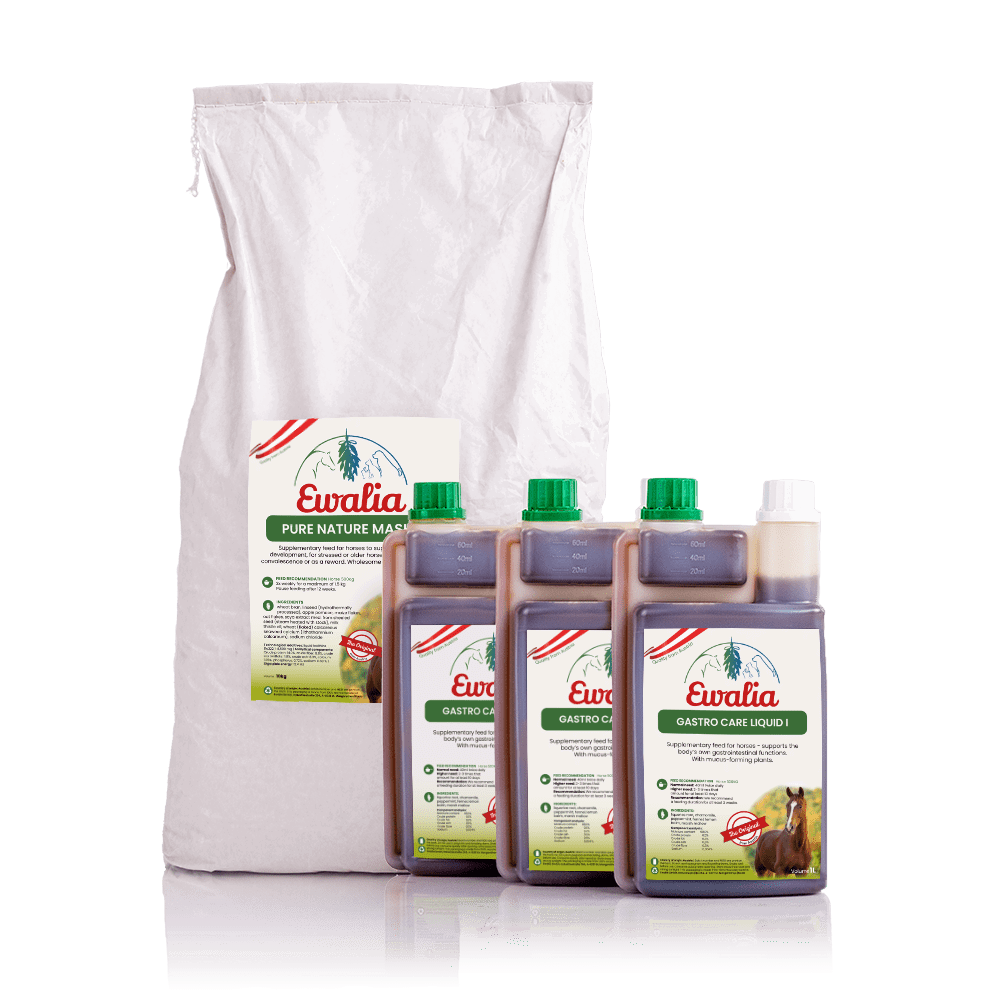
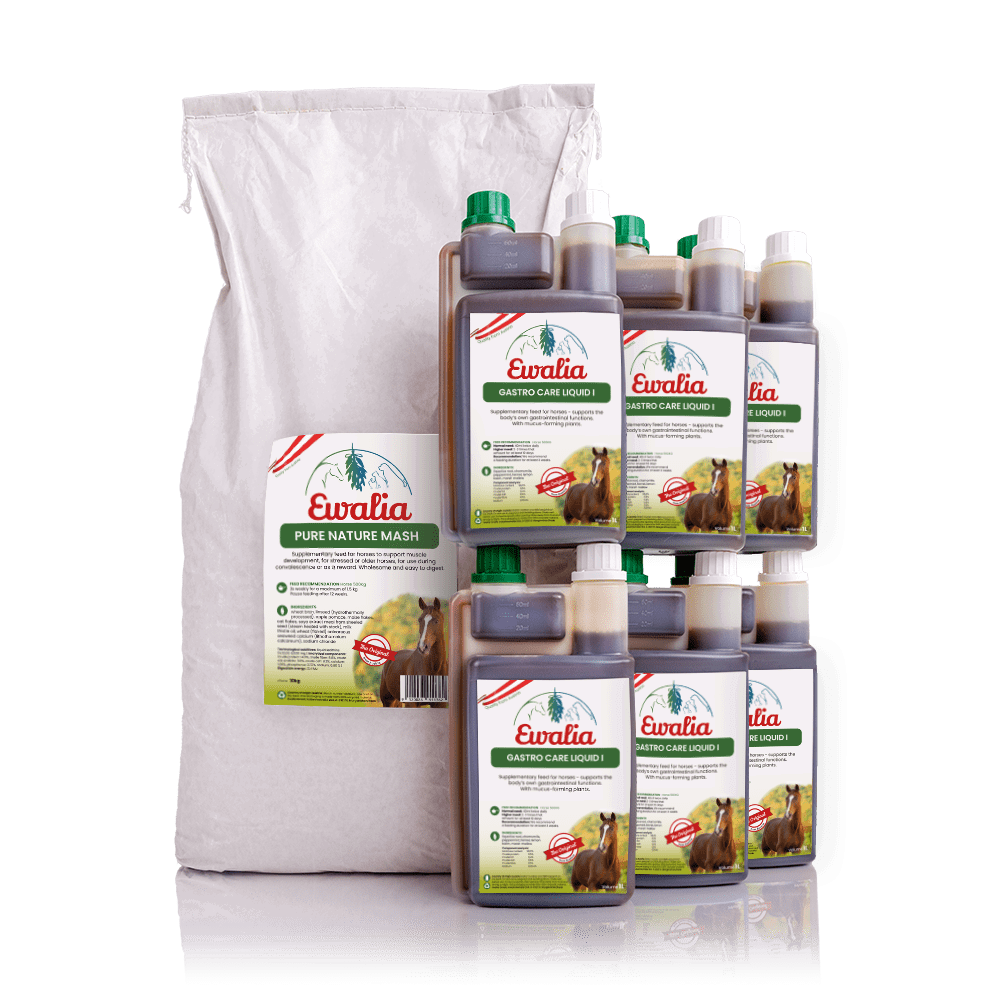
For existing problems/symptoms: 👉 Here we recommend the 6-litre course
We recommend feeding the increased requirement (3 times the daily dose) at the beginning. Stay on the high dosage until an improvement occurs, plus 2 days. Then feed 2 times the normal requirement. If the improvement continues, feed the remaining bottles at the dosage according to the normal requirement. How much needs to be fed always depends on the individual problem, i.e. whether improvement occurs faster or not.
For prevention: 👉 Here we recommend the cure with 3 liters
To prevent problems and support general well-being: preventively, meaning no increased requirement, just the normal requirement for at least three weeks.
Not sure if your horse will eat our products? No problem! We offer you our EWALIA Eating Guarantee.
If your horse does not accept our products, you will get the full purchase price back from us. How does it work and what do you need to keep in mind? Simply send the products back to us within 30 days of purchase and fill out our form with the details of your order, a short uncut video of your horse and the proof of purchase.
If you purchased your EWALIA products from a retailer, contact the retailer directly within 30 days of purchase with your proof of purchase and video. They will refund the purchase price to you immediately. The Eating Guarantee can be used once per customer on products ordered for the first time. Per order, the guarantee applies to up to two different products.
You can find more information about our Eating Guarantee here in our terms and conditions: Eating Guarantee.
1. Better absorption and availability
Herbal liquids contain the active ingredients in dissolved form, which makes absorption in the body easier. This is especially true for animals with sensitive digestion or poor chewing ability (e.g. old horses or dogs), who often tolerate them better.
2. Higher bioavailability
Thanks to the liquid form, nutrients and secondary plant compounds are absorbed into the bloodstream more quickly, so they take effect faster. Dried herbs first have to be broken down in the digestive tract, which takes longer.
3. No dust exposure
Dried herbs can be dusty, which can be especially problematic for sensitive airways (e.g. horses with COB or dogs with allergies). Herbal liquids are dust-free and therefore also suitable for animals with respiratory conditions.
4. Easier dosing & feeding
Herbal liquids are easier to mix into feed or give directly into the mouth. For fussy animals in particular, the liquid form can be advantageous, as acceptance is often higher than with bitter-tasting, dried herbs.
5. No burden from inferior feed quality
Some dried herbs lose their active compounds due to improper storage or contain fungi, mould or contaminants. High-quality herbal liquids are freshly pressed and gently processed, so the ingredients are largely preserved.
We recommend feeding our product twice daily. This ensures that the organism can optimally absorb the valuable herbal active ingredients. One option is to prepare the feed the evening before for the morning feeding by the stable hand etc., provided it is administered within 24 hours (especially important in summer). Alternatively, one portion can be fed before and one after the riding session.
If twice-daily feeding is not possible, we recommend administering 80% of the total daily dose to achieve the desired effect. For example, this would be 112 ml once daily for a total daily dose of 140 ml (70 ml + 70 ml). Our experience shows that regular twice-daily feeding is the best option to fully harness the effectiveness of our products.
You can find all further questions in our 👉 FAQs
Our products serve as a supportive measure in the form of complementary feed and do not replace veterinary examinations.
Yes, up to 3 liquids can be fed at the same time.