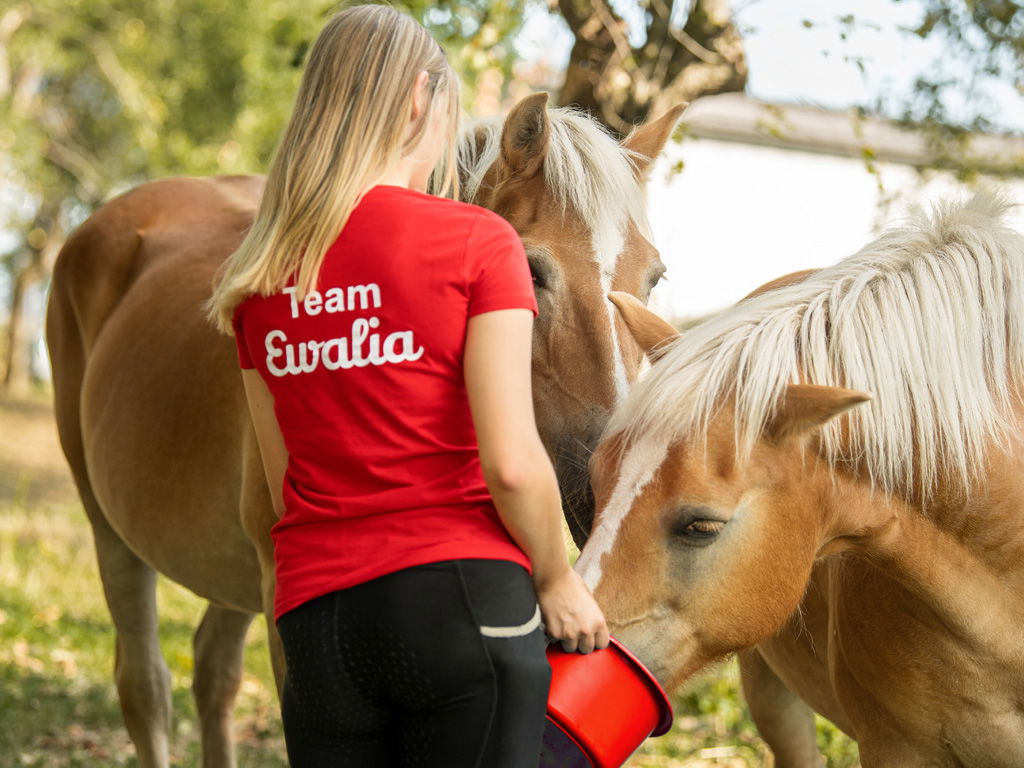


Summer Eczema in Horses


- with the power of milk thistle
- supports natural metabolic function
- with stimulating detox herbs
What Is Classic Summer Eczema in Horses?
Basically, it is a hypersensitivity reaction of your horse's immune system, which reacts to the saliva of mosquito-like insects such as Culicoides spp., biting midges, Simulium, and black flies. So, a type of allergy. Why and from what point exactly your horse may suddenly develop summer eczema cannot be predicted. In principle, it can affect any horse breed, any sex, and any age. The saliva of the mosquito-like insect enters your horse's body. It contains special proteins that represent an antigen. The horse's body reacts to this antigen with antibodies and thus tries to fight the antigens, resulting in an immune reaction. If the immune response is very intense, this is called a hypersensitivity reaction. Your horse has, so to speak, been sensitized to the saliva and has developed an allergy. From this point on, it is referred to as classic summer eczema.
❓ Hypersensitivity reaction: This is an excessive reaction of the immune system to substances that are actually harmless, such as insect saliva or pollen. In horses, this often manifests as itching, skin inflammation, or allergic reactions.
❓ Culicoides spp.: These are small biting midges, also known simply as midges. They are especially active at dusk and can trigger strong allergic reactions in horses, especially summer eczema.
Typical Symptoms of Summer Eczema!
Various symptoms cannot always be clearly attributed to summer eczema, as nervous behavior and itching in horses can also have other causes. Characteristically, the symptoms of summer eczema appear on the mane crest, withers, croup, tail base, or also the belly. After a bite, swelling occurs, which can initially be overlooked - more noticeable is the nervous behavior of the affected horse, which is plagued by itching and tries to fend off insects by swishing its tail, rubbing, or kicking its hind leg toward its belly. This often causes hair loss and skin injuries in the affected areas, which promotes secondary infections. Open wounds, in turn, are a breeding ground for pests of all kinds.
👉Itching
👉Swelling after insect bites
👉Hair loss
👉Skin injuries
👉Open wounds
👉Nervous behavior (tail swishing, rubbing)


How Can I Support My Eczema-Prone Horse?
An allergy itself can no longer be cured, but there is still a lot you can do for your horse.
There are several ways to do this:
- Use a sweet itch rug - Provides protection from bites and helps with itching.
- Stable your horse at dawn and dusk - Insect activity is highest in the morning and evening, while it is usually lower during the midday heat.
- Open stable with a retreat option - A dark, walled stable provides shelter. Many horses with sweet itch voluntarily spend a lot of time there.
- Avoid pastures and stables near water - Damp areas attract insects and should be avoided if possible.
- Use insect traps & repellent sprays - Tip: EWALIA Insect Repellent Spray for reliable protection.
- Summer pasture at higher altitudes - From 1800m above sea level insects are barely an issue – ideal for severely affected horses.
Horses with sweet itch should be fed a low-protein diet, because a protein content that is too high puts strain on the liver and additionally irritates the immune system.
If your horse rubs itself severely and skin injuries occur, thorough wound care is essential. Clean the wound carefully and, if necessary, treat it with a suitable ointment to support the recovery process. Untreated wounds can quickly become inflamed and, in the worst case, lead to infections or even sepsis.
💡 Tip: EWALIA Chamomile-Zinc Cream & Calendula Cream
Imagine you're itching really badly and someone takes away every way you have of scratching. That's simply awful and borders almost on torture. For example, you can attach different brooms as a scratching option. Don't take away your horse's chance to find some relief!
Over the summer, your horse is not only exposed to psychological stress – its entire organism also works at full capacity. Due to the ongoing overreaction, the liver and kidneys can become overwhelmed with detoxification.👉 Support the metabolism and strengthen the immune system – essential for horses with sweet itch.
💡 Here's how you can help:
✨ EWALIA Liver & Kidney Herbal Tonic + Immune Vitality Tonic ✨
The allergic reaction to mosquito saliva puts strain on the detoxification organs, the liver and kidneys. That's why it's essential to support them specifically.
✔ Liver-Kidney Liquid: Promotes the body's own detoxification, helps with skin issues such as eczema, itching and dandruff and provides optimal metabolism, a shiny coat and natural detoxification.
✔ Immune Vital Liquid: Supports the immune system with a high-quality herbal blend, stabilizes overall vitality and resilience and helps the body respond better to allergic triggers.
During an allergic reaction, the immune system works harder through the skin – the most important detoxification organ. This leads to heavy dandruff formation on the mane crest, tail dock, under the eyes or in the ears, causing intense itching.
✅ Wash out dandruff thoroughly – This frees the skin from irritants.
✅ Keep the skin moist – A nourishing oil binds the flakes and helps care for the skin.
✅ Regular cleaning – Wash out the oil every 2–3 days, to remove old skin flakes, open pores and let the skin breathe.
💡 Tip: EWALIA Skin Wellness Oil & Anti-Itch Oil for optimal care!
Conclusion - Summer Eczema
Summer eczema is an allergic reaction to the saliva of certain insects and causes intense itching in horses. Prevention and relief are key: protection from bites through eczema blankets and stabling at dusk, skin care through washing and oiling, as well as an adjusted, low-protein diet. In addition, medicinal herbs can help support the metabolism. Wounds should be treated carefully, and opportunities to rub should remain available to give the horse some ease. Comprehensive management can significantly reduce the suffering of affected horses.


Medicinal Herbs, Herbs and Herbal Blends for Sweet Itch
- Lemon (Citrus limon)
is a popular ingredient in numerous insect sprays. Its refreshing scent successfully drives away insects and pests, and is safe to use around your four-legged friend - Anise (Pimpinella anisum)
as a traditional herbal remedy, is known not only for its positive effect on our airways and digestion. With its characteristic scent, it drives away many unwanted pests. - Cedarwood oil (Cetrus atlantica)
Its balsamic scent has an unmistakably calming effect on our autonomic nervous system. The essential oil is known for its antibacterial, anti-inflammatory and expectorant properties. As a fragrance, it is successfully used against ticks, moths and other pests. - Eucalyptus (Eucalyptus globulus Labill.)
likewise a popular ingredient in insect repellents. A distinction is made between different chemotypes of the essential oil. Eucalyptus citriodora, for example, is milder and gentler than other eucalyptus species. Besides repelling insects, the oil is also known for antimicrobial, anti-inflammatory, pain-relieving and antiallergic properties. - Mint (Mentha)
All species of the mint genus are consistently rich in essential oils, which are around 50% menthol. This is mainly responsible for the characteristic scent of mint. As a medicinal plant, mint oil is traditionally recognized for use with colds, digestive complaints, muscle pain and nerve pain. In insect repellence, mint oil serves as a highly potent active ingredient and is also widely used in aromatherapy. - Cloves (Syzygium aromaticum)
The spicy scent is mainly due to the active ingredient "eugenol". This also gives the roots of the native herb bennet its characteristic scent. In aromatherapy, the spicy oil, with its antibacterial properties, is used as a pain-relieving, relaxing and loosening agent, as well as an important ingredient in insect repellents.
Healing Process and Strengthening
In addition to insect protection, supporting the healing process is also an important point in tackling painful sweet itch. To do this, you can give your beloved companion's immune system extra support by feeding low-protein food and activating the metabolism. The liver and kidneys play a major role in metabolic processes. Administering medicinal herbs such as milk thistle (Silybum marianum), nettle (Urtica dioica), birch leaves (Betula alba), dandelion (Taraxacum officinale), yarrow (Achillea millefolium) or chicory (Cichorium intybus L) as a supplementary feed can significantly support these processes.
Care
Open wounds naturally need to be disinfected and treated. Skin care is also an important point here. Dead skin particles need to be carefully removed with a mane comb. Affected areas should be cleaned regularly and freshly treated. Also, don't take away your animal's opportunities to rub itself. Instead, support it with soothing skin oils and creams, so that the urge to scratch doesn't arise again in the first place. Suitable medicinal herbs can also provide helpful support here.
As a base oil, skin-friendly vegetable oils such as rapeseed oil are very well suited. Rapeseed oil is a popular ingredient in scar ointments in cosmetics and natural medicine, as it is absorbed slowly and replenishes fat well. It is rich in vitamin E and valuable oleic and linolenic acid. This also gives it anti-inflammatory and cell-regenerating properties. It also supports the skin's natural functions.
Important Medicinal Herbs
- Birch bark (Betula alba)
is used as a traditional herbal remedy, both internally for flushing therapy and rheumatic complaints, and externally for the treatment of superficial skin wounds as well as poorly healing burn wounds. Its anti-inflammatory, antibacterial and astringent properties make birch bark an effective component in wound treatment. - Bittersweet nightshade (Solanum dulcamara L.)
is one of the traditional herbal remedies. Its stems contain steroidal alkaloids, steroidal saponins and tannins. Used externally, it is applied to treat chronic eczema. For this, an aqueous extract of the plant is used as a compress or in the form of creams and ointments. Caution! Being a poisonous plant, bittersweet nightshade may only be used externally. - Borage (Borago officinalis)
belongs to the borage family and is closely related to comfrey. Like its "big brother," borage contains anti-inflammatory, wound-healing allantoin. It is also rich in silicic acid, mucilage, tannins, resins, saponins and fatty acids. In folk medicine, borage is used, among other things, for inflammation, rheumatic conditions, blood purification, and the treatment of atopic eczema. - Lavender (Lavandula angustifolia)
is known for its calming, soothing and antimicrobial effectiveness. As a traditional herbal remedy, it is used, among other things, externally in the form of baths, creams and ointments. The essential oil is used in aromatherapy and in folk medicine for wound treatment. - Wild pansy (Viola tricolora)
is also one of the traditional herbal remedies. ESCOP (European Scientific Cooperative on Phytotherapy) recommends using wild pansy for skin problems such as eczema, seborrhea, impetigo, acne, cradle cap and the treatment of diaper dermatitis. It can be used both internally and externally. In the case of hypersensitivity to salicylates, the use of wild pansy should be avoided. - Speedwell (Veronica officinalis)
also known as common speedwell or heath speedwell, is considered beneficial in folk medicine. It is used internally for complaints of the respiratory tract, gastrointestinal tract, liver, urinary tract, and to support metabolism. Externally, it is used as a gargle as well as for wound healing or chronic skin conditions. Important ingredients include aucubin, which has antibiotic, anti-inflammatory and soothing effects, as well as further iridoid glycosides, flavonoids, triterpene saponins and small amounts of tannins. - Oak (Quercus robur L.)
is considered a traditional herbal remedy. Recognized indications include internal use for treating mild diarrhea, as well as external use for mild inflammation of the skin and mucous membranes. Oak bark is used as a decoction, bath, ointment and compress. Applied externally, it also serves to ease itching and burning from hemorrhoids, as well as for the local treatment of mild inflammation in the mouth and throat area and in the genital and anal area. Its effectiveness is due mainly to the tannins it contains, with their astringent properties. - Chamomile (Matricaria chamomilla L.)
rich in flavonoids, phenolic acids, mucilage and essential oil. As a traditional herbal remedy, it is known for its soothing, calming, antimicrobial and anti-inflammatory effectiveness. Used externally, it is applied for inflammation of the mouth and throat as well as, as a supportive measure, for inflammation in the anal and genital area, and for mild skin inflammation (sunburn), superficial wounds and small boils. As an ointment, cream, compress or wash, it promotes wound healing and counteracts skin irritation. - Ribwort plantain (Plantago lanceolata L.)
is one of the traditional herbal remedies and is used not only internally for catarrh of the airways, but also externally for treating insect bites, skin inflammation and for wound healing. The active ingredient aucubin, among others, is responsible for its antimicrobial, fungicidal and soothing effect. Simply applying crushed ribwort plantain leaves can ease the itching and swelling of insect bites. Other plants containing aucubin include eyebright, mullein, and the speedwell mentioned above. - Lemon balm (Melissa officinalis)
with its characteristic scent, is one of the traditional herbal remedies. Among other things, lemon balm is known for its calming and soothing effectiveness. Applied as a balm or cream, it also develops its antimicrobial, fungicidal and antiviral effectiveness. Its use on sore skin areas caused by herpes infections or infectious insect bites is supported by medical studies. - Calendula / pot marigold (Calendula officinalis)
supports the natural skin functions and has a wound-healing effect. - Daisy (Bellis perennis)
is used in folk medicine as an ointment or wash for skin rashes and minor injuries. Used internally, it also has a positive effect on metabolism. - Zinc
is, of course, not a medicinal plant, but an important mineral with antibacterial effectiveness. Applying a zinc ointment essentially disinfects the affected area and also inhibits further bacterial growth. This, in turn, supports the healing process.
The list of beneficial herbs could be continued here with numerous further examples. What matters most is coordinating the herbs' application and effectiveness optimally, and ideally seeking advice from a specialist in herbs for horses.
Likewise, the scent of rose geranium, sandalwood, patchouli or lavender is popular for repelling insects. For a permanently insect-free indoor climate, you can also hang bundles of dried herbs in the room. Popular herbs for this include the well-known lavender (Lavandula angustifolia), but also the everlasting flower (Helichrysum italicum) with its antibacterial properties and spicy scent, cotton lavender (Santolina viridis), also known as holy herb, rue (Ruta graveolens) with its bittersweet aroma, or the coumarin-containing sweet woodruff (Galium odoratum). Such herb bundles not only improve the indoor climate. Herbal experts are familiar with their pest-repelling properties and use such herb bundles both in the stable for the animals and in living spaces and pantries, as well as in herb sachets in the linen closet.
Conclusion – Medicinal Herbs
Medicinal herbs and essential oils can effectively help horses with summer eczema. They support insect defense, soothe inflammation, promote wound healing, and strengthen the immune system. Herbs such as milk thistle, nettle, or lavender, as well as oils from lemon, eucalyptus, or cedarwood, offer natural protection and care. Targeted use can significantly improve the horse's well-being.


Frequently Asked Questions💡
For existing problems/ailments: 👉 Here we recommend the course of 6 liters
At the start, we recommend feeding the increased amount (3 times the daily dose). Stay on the higher dosage until an improvement occurs, plus 2 more days. Then feed 2 times the normal amount. If the improvement continues, feed the remaining bottles at the normal dosage. How much needs to be fed always depends on the individual issue - that is, whether an improvement occurs quickly or not.
For prevention: 👉 Here we recommend the course of 3 liters
To help prevent problems and support general well-being: preventively, meaning no increased amount, just the normal amount, for at least three weeks.
Not sure whether your horse will eat our products? No problem! We offer our EWALIA Palatability Guarantee.
If your horse doesn't accept our products, you'll get the full purchase price back from us. How does it work and what do you need to know? Simply send the products back to us within 30 days of purchase and fill out our form with the details of your order, a short, uncut video of your horse, and proof of purchase.
If you purchased your EWALIA products from a retailer, contact the retailer directly within 30 days of purchase with your proof of purchase and video. They will refund the purchase price immediately. The Eating Guarantee can be used once per customer on products ordered for the first time. Per order, the guarantee applies to up to two different products.
You can find more information about our Eating Guarantee here in our terms and conditions: Eating Guarantee.
1. Better absorption and availability
Herbal Liquids contain the active ingredients in dissolved form, which makes absorption in the body easier. This is often better tolerated, especially by animals with sensitive digestion or poor chewing ability (e.g. older horses or dogs).
2. Higher bioavailability
Thanks to the liquid form, nutrients and secondary plant compounds are absorbed into the blood more quickly, so they take effect faster. Dried herbs first have to be broken down in the digestive tract, which takes longer.
3. No dust exposure
Dried herbs can be dusty, which can be especially problematic for sensitive airways (e.g. horses with COPD or dogs with allergies). Herbal Liquids are dust-free and therefore also suitable for animals with respiratory conditions.
4. Easier dosing & feeding
Herbal Liquids are easier to mix into feed or give directly into the mouth. Especially with picky animals, the liquid form can be advantageous, as acceptance is often higher than with bitter-tasting dried herbs.
5. No impact from poor feed quality
Some dried herbs lose their active compounds due to improper storage or may contain fungi, mold, or contaminants. High-quality herbal Liquids are freshly pressed and gently processed, so the ingredients are largely preserved.
We recommend feeding our product twice daily. This ensures that the body can optimally absorb the valuable herbal active ingredients. One option is to prepare the feed the evening before for the morning feeding by the stable hand etc., as long as it is given within 24 hours (especially important in summer). Alternatively, one portion can be fed before and one after the riding session.
If twice-daily feeding is not possible, we recommend administering 80% of the total daily dose to achieve the desired effect. For example, that would be 112 ml once daily for a total daily dose of 140 ml (70 ml + 70 ml). Our experience shows that regular twice-daily feeding is the best option to make full use of our products' effectiveness.
You can find all further questions in our 👉 FAQs
Our products serve as a supportive measure in the form of complementary feed and do not replace veterinary examinations.
Yes, up to 3 Liquids can be fed at the same time.