

The Equine Sarcoid

- accelerates muscle recovery
- in preparation for athletic performance
- supports natural muscle function
What do sarcoids look like?
Sarcoids are skin growths with keratinized surfaces that can appear anywhere on the horse's body. In the early stage you might discover a small nodule under the skin or feel a thickened, scaly layer of skin. Some sarcoids can be mistaken for a fungal skin infection, others for warts or excessive scar tissue formation ("proud flesh"). When the lower limbs are affected, the growths sometimes resemble the skin lesions seen in mud fever or pastern dermatitis (cracked heels).
Sarcoids most often develop on thinly haired areas such as the head (around the eyes, mouth, ears), the girth area and the genital region of the horse. Irritation from bridles or girths stimulates sarcoids to grow more. Depending on the location of the tumor, a horse with sarcoids may no longer be rideable, even though its general condition and performance are not otherwise affected.
These skin tumors occur in various forms, which are classified differently according to their appearance and tissue findings. A tumor in a horse is usually benign, does not spread to the organs, and does not affect the animal's life expectancy. In most cases it is only a cosmetic problem. What they all have in common is that they can quickly progress into more aggressive forms.
A mixed form is also possible, meaning the tumor has features of two types of sarcoids.
Forms of sarcoids
Occult (hidden) sarcoids are flat, hairless patches on the horse's body. Like conventional sarcoids, they occur most often on thinly haired areas such as the eyes and mouth, neck and chest of the horse. They resemble abrasions or skin lesions caused by fungal infections. The skin surface in the affected areas is grey and scaly, sometimes also thickened. Occult sarcoids grow very slowly and can stay the same size for years.
Verrucous (wart-like) sarcoids can develop from occult sarcoids. They look like irregularly shaped, lumpy warts that form on the ear, in the armpits and in the groin area of the horse. These skin growths grow slowly and usually don't bother the horse. These sarcoids only become a problem when they break open due to injury or treatment attempts and take on a more aggressive, fibroblastic (fibre-forming) form.
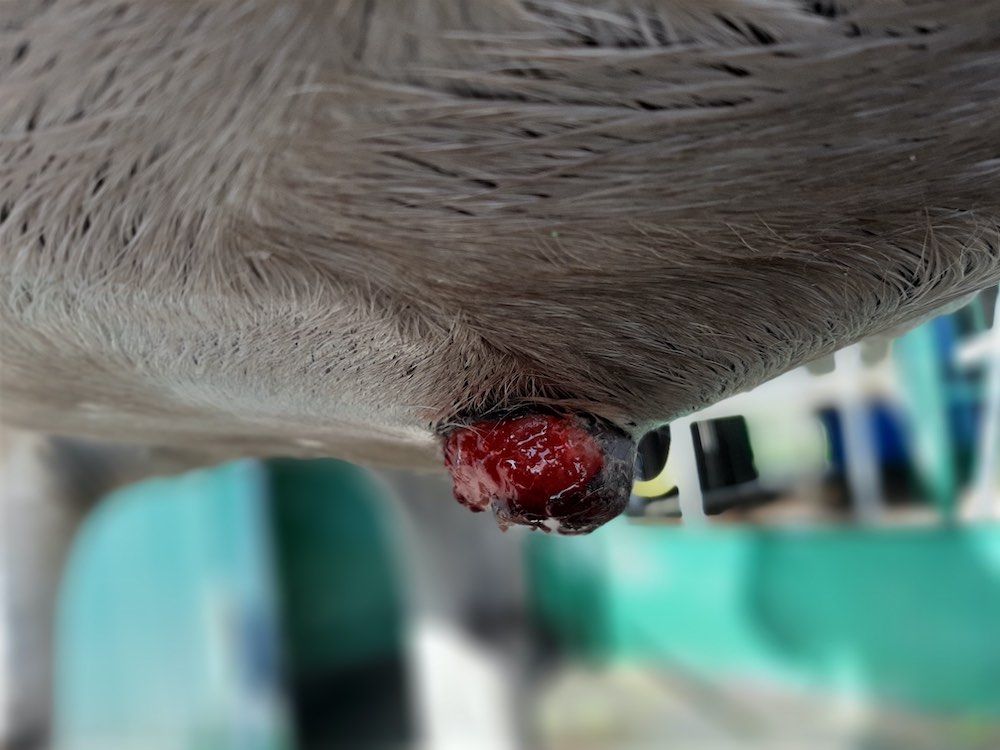
Fibroblastic sarcoids are broken-open, proliferating growths that can develop as a primary condition or from wart-like or nodular tumours that have become active due to injury. With their weeping, cauliflower-like, jagged surface, which attracts flies in summer, they are extremely uncomfortable for the horse. Left untreated, they form red, fleshy ulcers that bleed heavily when injured. The open wounds frequently become infected with bacteria. This leads to secondary bacterial infections and inflammation. This type of sarcoid shows uncontrolled, aggressive growth, interrupted by phases in which the tumour "stands still" and the owner starts to hope that the growth is healing. Because of the strong tendency to bleed, surgical removal of the ulcer is often recommended, but this frequently results in even stronger tumour growth.
The malevolent (malignant) sarcoid is the most aggressive form of equine sarcoid. The tumour spreads via the lymphatic pathways into the muscle fascia and muscle tissue of the affected region. In the advanced stage, firm strands can be felt under the skin, while the skin itself is usually not affected.
Nodular sarcoids feel like hard lumps under the skin. They are often movable, but sometimes firmly attached to the skin or pedunculated. They mostly occur in areas with thin skin, on the head, the inner thigh or the genital area. As long as the skin above them is still intact and the nodules are encapsulated, these sarcoids can usually still be removed well surgically. If the tumour grows and breaks through the skin, treatment becomes more difficult.
How does a sarcoid develop?
Sarcoids are caused by an infection with contagious papillomaviruses, more specifically by the bovine (cattle-infecting) papillomavirus (BPV) types 1 and 2. Papillomaviruses occur in many animal species and also in humans. They cause skin and mucous membrane tumors by using small wounds as an entry point and multiplying rapidly due to the accelerated cell growth during wound healing.
It used to be assumed that the viruses were transmitted from cattle to horses via insects. However, genetic analyses have shown that the genetic information of the papillomaviruses in cattle and horses does not match, meaning the horse would be a "foreign host" for BPV 1 and 2. Today it is assumed that infection occurs from horse to horse. Notably, within a herd of horses, usually only individual animals are infected.
A horse's susceptibility to sarcoids is likely to depend on several factors.
The history of affected horses often includes, for example:
- Housing and feeding mistakes, stress
- Weakened immune system, skin immune deficiencies, feed allergies
- Digestive problems such as free fecal water
- Metabolic disorders
- Liver and kidney problems
- Detoxification disorders
It is also suspected that sarcoids are hereditary, since certain breeds such as Arabians, Quarter Horses, Appaloosas and Thoroughbreds tend to be affected more often and the skin tumors occur more frequently within certain horse families.
How are sarcoids diagnosed?
Suspicious skin changes should be shown to a veterinarian immediately. Sarcoids can be readily distinguished from other skin cell growths. As a rule, they are quickly recognized by the veterinarian. To differentiate sarcoids from grass warts in young horses, melanomas or carcinomas, a histological examination may be useful. However, since any injury can activate and accelerate tumor growth, a biopsy is usually advised against. Newer studies describe less risky methods for detecting sarcoids. For example, it is possible to detect BPV DNA using a PCR test from swabs, skin scrapings, crusts or hair roots. The problem here, however, is that BPV DNA can also be found in unaffected tissue, which would make the test a false positive.
Conclusion
Equine sarcoid is the most common skin tumor in horses and, despite being benign, can quickly become aggressive. Sarcoids often appear on thinly haired areas and significantly affect the horse. Various forms of sarcoids exist, differing in appearance and behavior. Treating them is difficult, as they frequently recur. They are caused by papillomaviruses, favored by genetic predisposition and a weakened immune system.
Can sarcoids be prevented? Is there a vaccine against sarcoids?
The risk of infection with sarcoids is relatively low. Horses with sarcoids do not need to be kept separate from other horses. Normal stable hygiene, including using your own grooming equipment, tack, blankets, boots etc., is sufficient, but swapping stalls with an affected horse should preferably be avoided.
Some laboratories offer the production of an autovaccine against sarcoids for horses and dogs. Autovaccines are individualized medicines made from the patient's own disease-causing agents. For the sarcoid vaccination, a vaccine is produced from the tumor tissue of the affected horse, which can be used to treat the affected animal and also as a preventive measure within the herd. Producing such a vaccine takes about 10 days. The vaccine must be administered twice, about 3–4 weeks apart.
What treatment options are there for a horse with sarcoids?
Nodular, encapsulated and well-defined sarcoids should be completely removed surgically at an early stage. Depending on the type, location and extent of the sarcoid, surgical removal, destruction of the tumour by cold or electricity, or radiation therapy may be considered. The occasionally practised ligation of nodular sarcoids often leads to the spread of tumour tissue. However, wound healing problems frequently occur after surgical sarcoid treatments. Likewise, the tumour can also re-form in a more aggressive form. Good results, on the other hand, can be achieved with laser surgery.
This is carried out using preparations that can damage and destroy cells. The agents are either injected or applied in the form of an ointment. Undesirable effects during application can occur not only in the treated horse, but also in the owner and veterinarian! A study (2017) showed that the combination of chemo- and electrotherapy, in which electrical impulses are delivered into the tissue after implanting a heavy-metal-containing preparation into the tumor, could be a very promising treatment method.
A relatively new method is the local treatment of the tumor with interleukin-2 injections. Interleukin, known from cancer treatment, boosts the body's own defenses. The body is meant to reject the tumor itself through an inflammatory reaction. In some cases, however, the immune reactions are so severe that the therapy has to be discontinued due to high fever or severe swelling.
Treatment of the tumor with Bacillus Calmette-Guérin injections, also known as „BCG vaccination“, is intended to trigger a local immune reaction directed against the degenerated cells. BCG was originally developed as a vaccine against tuberculosis. In sarcoid treatment, BCG is injected into the tumor, causing the tumor cells to die off. Depending on the treatment schedule, this treatment should be repeated every 2 to 4 weeks until the tumor regresses. For unknown reasons, the success rate is particularly high for sarcoids around the eyes. However, the treatment can cause severe side effects, ranging from severe local inflammatory reactions to anaphylactic shock.
This therapy leads to good treatment outcomes, but is very costly and is only offered by a few clinics.
Since all these treatment options are unpleasant for the affected horse and place more or less of a strain on the organism, the question arises of milder therapies for sarcoids that can also lead to success. One option is local treatment of the sarcoid with ointments.
Mild Therapies
This ointment, a preparation used in human medicine for herpes, has shown positive effects on sarcoids that are not yet strongly developed. The ointment treatment can also complement surgical measures, chemo- or laser therapy and help the skin lesions heal.
Local treatment of the sarcoid with colloidal silver, applied several times daily over several weeks in the form of soaked bandages, is successful in some horses. The „silver water“ has an antimicrobial effect and is meant to dry out the tumor cells.
These are ointments containing the plant-based ingredients of bloodroot. Their effect is based on a local stimulation of the immune system, which rejects the tumorous tissue within about a week through an inflammatory reaction. Wound healing usually proceeds without problems. Bloodroot ointments are very effective for sarcoids up to a size of 2 cm.
Is there a phytotherapeutic treatment for sarcoids?
In human medicine, extract from the European mistletoe (Viscum album austriacus) is used as a complementary therapy for various tumors. Mistletoe has antitumor and immunomodulating properties. Its effectiveness against sarcoids has been demonstrated in studies. Mistletoe therapy is lengthy and involves a series of injections at various mistletoe concentrations. It is usually very well tolerated by horses and, especially in younger horses under nine years old, often leads to a cure in many cases. For older horses and recurring sarcoids, two mistletoe treatment courses per year are recommended. However, some horses do not respond to mistletoe therapy.
How can I support my horse if it suffers from sarcoids?
Papillomaviruses are present everywhere in the horse's environment. What determines whether a horse develops sarcoids or not is the horse's immune response to the viruses. The immune response of the individual horse depends on many factors that you, as a horse owner, can influence. Housing conditions, feeding, stress within the herd, and stress from riding are some of them. Metabolic disorders that place a heavy strain on the liver and kidneys also weaken your horse's immune system.
A very good way to get sarcoids under control is the early local treatment of the skin tumor with tormentil ointments, combined with targeted strengthening of the immune system through plant-based active ingredients.
Boosting immune system resilience
It contains valuable antioxidants and lots of vitamin C, which supports the formation of antibodies.
Fennel has antimicrobial and anti-inflammatory properties.
Hawthorn can improve heart performance during periods of stress.
Last but not least, lemon balm also has virustatic properties. In addition, its gently calming active ingredients have a positive effect on the horse's psyche, which is also burdened by the sarcoid disease or the manipulations it requires.
This herb has immune-stimulating and anti-inflammatory properties.
Support the liver & kidneys to help eliminate toxins
These herbs stimulate the metabolism by increasing urine output.
It is a proven remedy to protect the liver and support the regeneration of liver cells.
The bitter compounds in dandelion increase the production of gastric acid, bile and intestinal secretions. They support digestion and can help relieve the liver.
Some – unfortunately not all – horses shed their sarcoids on their own after weeks or months, following consistent treatment of underlying metabolic disorders and strengthening of their immune system. An individual treatment plan must be found for horses with sarcoids, as horses respond very differently to the various treatment options.
But be careful: Every treatment strategy should always be discussed with the veterinarian beforehand! Experiments can be dangerous! Injuries or irritation to a sarcoid always carry the risk that the tumor will begin to spread and take on a more aggressive form!
Conclusion
Sarcoids in horses are stubborn skin tumors whose treatment must be tailored individually. Various therapies such as surgical procedures, immunotherapy or the use of ointments show varying degrees of success. Early treatment and targeted strengthening of the immune system are important for combating sarcoids. However, every therapy should be carefully coordinated with a veterinarian to minimize risks.


Frequently Asked Questions💡
For problems/ailments: 👉 Here we recommend the course with 6 liters
We recommend feeding the increased amount (3 times the daily dose) at the beginning. Stay on the high dosage until an improvement occurs, plus 2 more days. Then feed 2 times the normal daily amount. If the improvement continues, feed the remaining bottles at the normal dosage. How much needs to be fed always depends on the individual issue, i.e. whether improvement occurs faster or not.
For prevention: 👉 Here we recommend the course with 3 liters
To prevent problems and support general wellbeing: preventively, meaning no increased amount, just the normal daily amount for at least three weeks.
1. Better absorption and availability
Herbal liquids contain the active ingredients in dissolved form, which makes absorption in the body easier. They are often better tolerated, especially by animals with sensitive digestion or poor chewing ability (e.g. old horses or dogs).
2. Higher bioavailability
Due to their liquid form, nutrients and secondary plant compounds are absorbed into the blood more quickly, so they take effect faster. Dried herbs first have to be broken down in the digestive tract, which takes longer.
3. No dust exposure
Dried herbs can be dusty, which can be problematic especially for sensitive airways (e.g. horses with COPD or dogs with allergies). Herbal liquids are dust-free and therefore also suitable for animals with respiratory conditions.
4. Easier dosing & feeding
Herbal liquids can be mixed into feed more easily or given directly into the mouth. Especially with picky animals, the liquid form can be advantageous, as acceptance is often higher than with bitter-tasting dried herbs.
5. No burden from inferior feed quality
Some dried herbs lose their active ingredients due to improper storage or contain fungi, mold or contaminants. High-quality herbal liquids are freshly pressed and gently processed, so the ingredients are largely preserved.
Yes, up to 3 Liquids can be fed at the same time.
We recommend feeding our product twice daily. This ensures that the body can optimally absorb the valuable herbal active ingredients. One option is to prepare the feed the evening before for the morning dose (e.g. by the stable staff), as long as it is given within 24 hours (especially important in summer). Alternatively, one portion can be fed before and one after the riding session.
If twice-daily feeding is not possible, we recommend administering 80% of the total daily dose to achieve the desired effect. For example, that would be 112 ml once daily for a total daily dose of 140 ml (70 ml + 70 ml). Our experience shows that regular twice-daily feeding is the best option to fully take advantage of the effectiveness of our products.
You can find all further questions in our 👉 FAQs
Our products serve as a supportive measure in the form of a complementary feed and do not replace veterinary examinations.
Not sure if your horse will eat our products? No problem! We offer our EWALIA Palatability Guarantee.
If your horse doesn't accept our products, you'll get the full purchase price back from us. How does it work and what do you need to know? Simply send the products back to us within 30 days of purchase and fill out our form with the details of your order, a short, uncut video of your horse, and the proof of purchase.
If you purchased your EWALIA products from a retailer, contact the retailer directly within 30 days of purchase with your proof of purchase and video. They will refund the purchase price to you immediately. The Feeding Guarantee can be used once per customer on products ordered for the first time. The guarantee applies to up to two different products per order.
You can find more information about our Feeding Guarantee here in our terms and conditions: Feeding Guarantee.