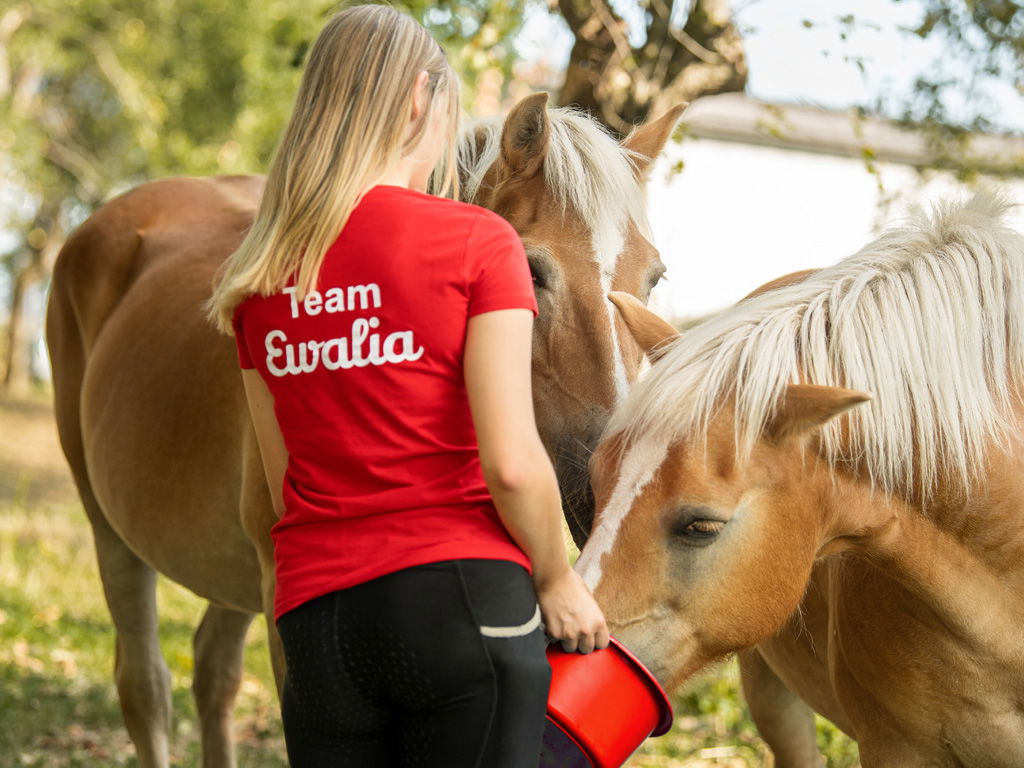


Nervous Horse – Strengthening Nerves and Reducing Stress with Herbs
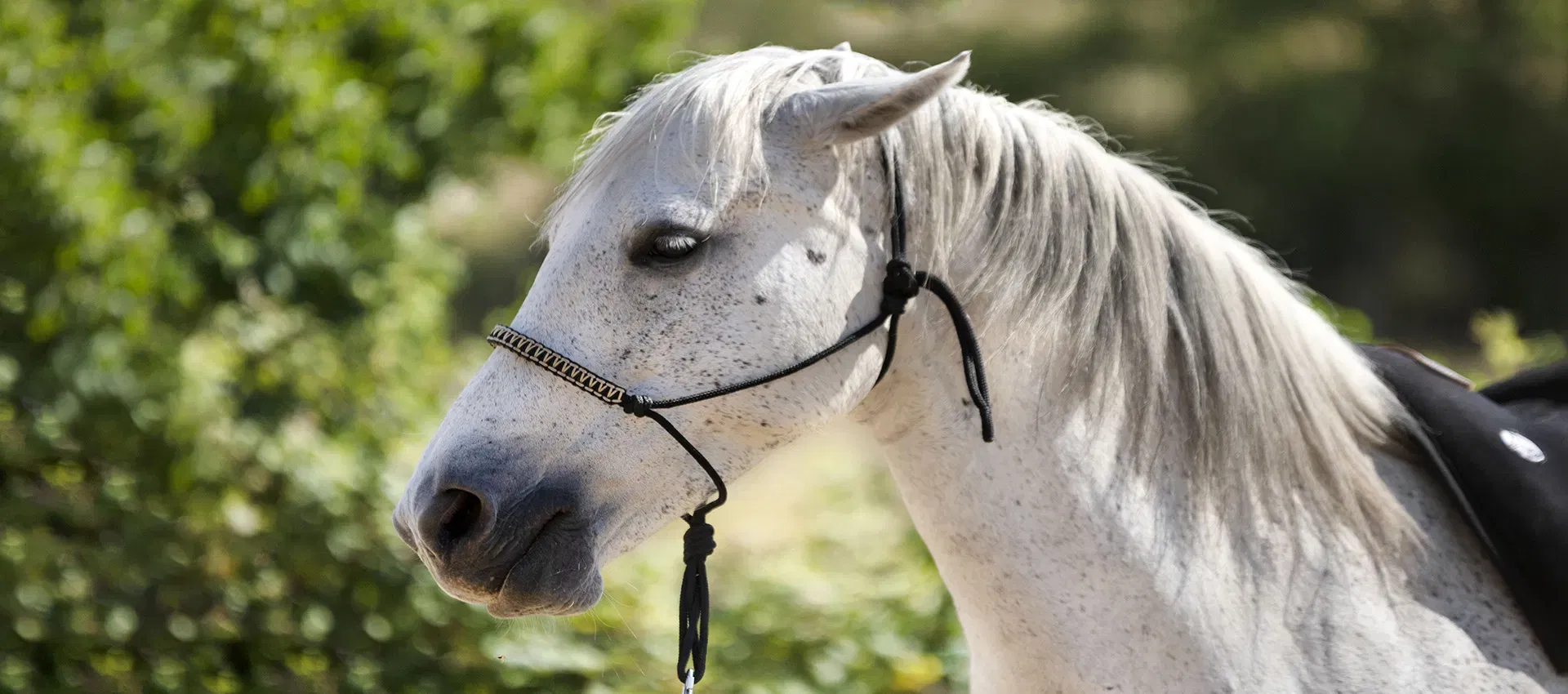

- for strong nerves
- for a relaxed & calm daily life
- better adaptation to stressful situations
What Is Stress in Horses?
Stress as a natural protective mechanism of a mammal is no less important than digestion or breathing. It originally protected against predators, enemies, and dangerous situations, thereby ensuring survival.
For animals living in the wild, there are numerous stressors, meaning reasons or triggers to which the horse typically responds with flight. Wild horses usually react with fear and flight not only to the appearance of a predator, but also to loud noises, fast movements, and unfamiliar situations. Psychological pressure can also lead to physical stress, such as a sudden separation from the herd. After all, staying with the herd ensures survival in the wild. Sophisticated mechanisms are at work within the horse's body, allowing it to be precisely controlled and to flee efficiently. The stress level decreases through the act of fleeing.
The Horse's Autonomic Nervous System
The autonomic nervous system (vegetative nervous system) controls many vital body functions such as breathing and digestion and is centrally controlled in the brain. Within the autonomic nervous system, the sympathetic nervous system and parasympathetic nervous system (parts of the autonomic nervous system) act on various physiological mechanisms, among other things.
The sympathetic nervous system increases blood flow to the muscles, increases respiratory rate and heart rate, and inhibits digestive activity, so the body can respond optimally with flight.
The parasympathetic nervous system, on the other hand, promotes salivation, digestive activity, and excretion and is thus its counterpart.
What Are the Triggers of Stress in the Modern Horse?
Although the modern, domesticated riding horse is rarely exposed to life-threatening stressors, it perceives various stimuli in the same way as a wild horse. Your horse therefore reacts to stress with the same biological mechanisms as its ancestors. However, since it often cannot flee — for example by galloping away from the source of danger (movement reduces stress) — the physical symptoms persist. The hormone level, which rises sharply during stress, is therefore not sufficiently reduced due to the lack of flight through movement, which brings with it a variety of physical consequences. Gastritis, stomach ulcers, muscle tension, restricted digestive activity, and increased muscle tone are often triggered by prolonged stress.
Besides triggers such as loud noises, fast movements, light stimuli, and an unfamiliar environment, there are numerous stressors that are firmly rooted in the horse's biology. For example, horses respond with psychological stress to separation from companions, unrest within the herd, insufficient access to water and food, being alone, and performance pressure.


What Are the Consequences of Stress in Horses?
In addition to the sometimes serious physical consequences already mentioned, a horse also suffers greatly from stress psychologically, which can lead to poor concentration, overreactions, and even "explosive" and dangerous behavior for both horse and rider. Physically, stress develops gradually but continuously, up to the so-called "point of no return." This refers to the point where the consequences caused by stress lead to physical discomfort severe enough that this pain in turn causes further stress. This creates a vicious cycle that is difficult to break. A typical example of this is stress-induced stomach problems such as gastric ulcers or gastritis
How can I reduce stress in my horse?
Alongside species-appropriate housing and adequate exercise as well as regular health checks, feeding plays a major role.
So you can quite literally feed your horse to happiness and reduce stress naturally.
The foundation is high-quality roughage. Depending on your horse's needs, individually adjusted concentrate and mineral feed is essential. Different herbs can help with stress quickly and specifically. Thanks to the calming, relaxing properties of valerian, hops and the like, your stressed horse can be optimally supported, which noticeably improves quality of life and rideability. When your horse is calmer, it's more receptive to aids and can focus better on training.
Herbs for nervous horses
Certain herbs have long been known as natural calming aids and are widely used in both human and veterinary care. Below is a clear overview of the herbs used in supplementary feed and liquids – helping you strengthen your horse's nerves and support natural stress reduction:
🌿 Valerian (Valeriana officinalis L.)
traditionally used for sleep disturbances, states of tension, nervousness and irritability
🌿 Hops (Humulus lupulus)
traditionally used for restlessness, states of tension, sleep disturbances and to support digestion
🌿 Lemon balm (Melissa officinalis L.)
traditionally used for restlessness, tension and stomach discomfort, and known for its soothing and uplifting properties
🌿 Chamomile (Matricaria Chamomilla L.)
traditionally used for sleeplessness, also calming, soothing and tonifying
🌿 Lavender (Lavendula augustifolia)
traditionally used for low mood, difficulty falling asleep, nervousness, restlessness and stress
As you can see, you can support your horse naturally, simply and effectively when it comes to stress and nervousness. Together with the right feeding, suitable training and species-appropriate housing, your tense, nervous and unpredictable companion can become a reliable, willing partner.

Frequently Asked Questions💡
For problems/complaints: 👉 Here we recommend the course with 6 liters
At the start, we recommend feeding the increased amount (3 times the daily dose). Stay on the high dosage until an improvement occurs, plus 2 more days. Then feed 2 times the normal amount. If the improvement continues, feed the remaining bottles at the normal dosage. How much needs to be fed always depends on the individual problem, i.e. whether improvement occurs sooner or later.
For prevention: 👉 Here we recommend the course with 3 liters
To help prevent problems and support general well-being: preventively, meaning no increased amount, just the normal amount for at least three weeks.
Not sure whether your horse will eat our products? No problem! We offer our EWALIA Feeding Guarantee.
If your horse doesn't accept our products, we'll refund you the full purchase price. How does it work and what do you need to know? Simply send the products back to us within 30 days of purchase and fill out our form with the details of your order, a short, uncut video of your horse, and proof of purchase.
If you purchased your EWALIA products from a retailer, contact the retailer directly within 30 days of purchase with your proof of purchase and video. They will refund the purchase price immediately. The Feeding Guarantee can be used once per customer on products ordered for the first time. The guarantee applies to up to two different products per order.
You can find more information about our Feeding Guarantee here in our terms and conditions: Feeding Guarantee.
1. Better absorption and availability
Herbal Liquids contain the active ingredients in dissolved form, which makes absorption in the body easier. They are often better tolerated, especially for animals with sensitive digestion or poor chewing ability (e.g. old horses or dogs).
2. Higher bioavailability
Thanks to their liquid form, nutrients and secondary plant compounds are absorbed into the blood more quickly, so they take effect faster. Dried herbs first have to be broken down in the digestive tract, which takes longer.
3. No dust exposure
Dried herbs can be dusty, which can be especially problematic for sensitive airways (e.g. horses with COPD or dogs with allergies). Herbal Liquids are dust-free and therefore also suitable for animals with respiratory conditions.
4. Easier dosing & feeding
Herbal Liquids can be mixed into feed more easily or given directly into the mouth. Especially with picky animals, the liquid form can be advantageous, as acceptance is often higher than with bitter-tasting dried herbs.
5. No burden from lower feed quality
Some dried herbs lose their active ingredients due to improper storage or contain fungi, mold, or contaminants. High-quality herbal Liquids are freshly pressed and gently processed, so the ingredients are largely preserved.
We recommend feeding our product twice daily. This ensures that the body can optimally absorb the valuable herbal active ingredients. One option is to prepare the feed the evening before for the morning feeding by the stable hand, etc., as long as it's given within 24 hours (especially important in summer). Alternatively, one portion can be fed before and one after the riding session.
If twice-daily feeding isn't possible, we recommend administering 80% of the total daily dose to achieve the desired effect. For example, that would be 112 ml once daily for a total daily dose of 140 ml (70 ml + 70 ml). Our experience shows that regular twice-daily feeding is the best way to make full use of our products' effectiveness.
You can find all further questions in our 👉 FAQs
Our products serve as a supportive measure in the form of a complementary feed and do not replace veterinary examinations.
Yes, up to 3 Liquids can be fed at the same time.