










Choke in Horses: Symptoms, Causes & First Aid


- supports the respiratory tract
- with expectorant, anti-inflammatory & soothing herbs
- for easier breathing
Choke in Horses – When the Throat Gets Blocked:
A choke, medically also called esophageal obturation or esophageal blockage , is a common and acute emergency in horses. It occurs when feed or a foreign object becomes lodged in the esophagus and blocks the passage to the stomach. This causes the horse a strong gagging reflex and leads to nasal discharge containing feed and saliva. It is always an acute emergency that must be immediately examined and treated by a veterinarian , as untreated it can lead to serious complications such as life-threatening pneumonia (aspiration pneumonia).
The horse's esophagus is a muscular tube about 1.5 meters long that connects the mouth and stomach. It is relatively narrow, with a diameter roughly the size of a 1-cent coin, but can expand to about 3 cm. A special anatomical feature is the very sharp angle at the stomach entrance, which is secured by a strong sphincter muscle. This unique anatomy of the horse – the long, narrow esophagus, the strong sphincter muscle at the stomach entrance, and the inability to vomit – is the primary reason why a choke escalates from a simple case of "feed getting stuck" to a life-threatening emergency. The horse has no natural way to clear the blockage, which massively increases the risk of aspirating feed and saliva into the airways and thus of pneumonia . If feed gets stuck, it can go neither into the stomach nor back into the mouth, which makes the situation so dangerous. This physiological vulnerability underscores the urgency of immediate professional intervention and the critical importance of preventive measures, since the horse lacks an innate protective mechanism against this type of blockage.
How to recognize choke in horses? Typical symptoms and signs
The symptoms of choke usually appear suddenly and escalate rapidly, which often leads to panic in the horse. Horse owners will observe that the animal abruptly refuses to eat and shows signs of restlessness, pawing with its hooves, head shaking, and heavy sweating. The horse may also appear apathetic or show colic-like symptoms such as an elevated pulse and respiratory rate, restlessness, and rolling.
The most conspicuous and diagnostically most important symptom is heavy, foamy salivation, which is often mixed with feed remnants and comes out of both nostrils as well as the mouth. This is a clear sign that the feed is not reaching the stomach. Your horse will also repeatedly try to retch and cough to clear the blockage. The combination of sudden refusal to eat, nasal discharge containing feed and saliva, and repeated retching or coughing attempts forms the core diagnostic signature of choke for horse owners. While general signs of pain such as restlessness or sweating can also occur in other emergencies such as colic, the specific symptoms at the mouth and nostrils are the decisive indicator of choke. This precise observation enables horse owners to make a quick and accurate initial assessment, which is crucial for initiating timely veterinary treatment and improving the horse's prognosis.
What does green/yellow/foul-smelling nasal discharge in horses mean?
While choke usually causes foamy, feed-containing saliva to come out of the nostrils, other colors and smells can indicate further problems. Green or yellow nasal discharge often indicates a bacterial infection of the respiratory tract, such as sinusitis or bronchitis. However, if this green discharge contains feed particles, this is a strong indication of choke. A foul smell of the nasal discharge can indicate a bacterial infection, an inflammation of the sinuses, or a foreign object that is decomposing.
The horse often stretches its head and neck far forward and lowers them toward the ground. It may also adopt a tense, cramped posture. Occasionally, a visible or palpable swelling can be detected on the left side of the neck, in the area of the jugular groove, where the esophagus is located and the feed bolus is stuck.
The appearance of "hay wads" while eating is an important early warning sign of dental problems, which in turn are a main cause of choke. This observation shows a causal link between a subtle symptom and a potentially serious emergency cause. If a horse drops wads of hay from its mouth, this indicates that it cannot chew its feed sufficiently, which increases the risk that feed chunks that are too large or insufficiently salivated will get stuck in the esophagus. This underscores the need for proactive observation of feeding behavior and highlights the importance of regular dental checks as the primary preventive measure. A seemingly minor sign thus becomes a critical indicator of the horse's health.
To give you a quick overview, we have summarized the typical symptoms of choke in the following table:
Typical symptoms of choke – recognize quickly, act correctly
The horse abruptly stops eating, even if it is hungry.
Significance: One of the first and clearest signs; immediate attention required.
Repeated, spasmodic attempts to clear the blockage.
Significance: The horse is trying to remove the foreign object, but is unsuccessful.
The neck may appear stiff and tense, often stretched forward or lowered toward the ground.
Significance: An expression of pain and discomfort; may indicate the location of the blockage.
A firm, thickened spot on the left side of the neck (jugular groove).
Significance: Direct indication of a feed mass in the esophagus.
General signs of stress and pain, similar to colic.
Significance: The horse is suffering and feels threatened; stay calm and inform a veterinarian.
Partially chewed, oversized hay balls fall out of the mouth.
Significance: An early warning sign of dental problems, which increase the risk of choke.
Foamy saliva, often mixed with feed residue, comes out of both nostrils and the mouth. May have the color of the feed (green, brown).
Significance: Clear sign of a blockage; high risk of aspiration (pneumonia). Call a veterinarian immediately!


What causes choke in horses? Primary and secondary triggers
The causes of choke are varied and can be divided into primary and secondary triggers. Understanding these differences is crucial for effective prevention and treatment.
Feeding mistakes: Which feeds are particularly risky?
The most common cause of choke is swallowing feed too quickly, often caused by extreme hunger or feed rivalry within the herd. When a horse eats hastily, it doesn't chew sufficiently and doesn't salivate the feed enough. This leads to the formation of chunks that are too large and dry, which can get stuck in the esophagus.
Feeds that swell and have not been soaked sufficiently or for long enough, such as sugar beet pulp and pellets, are particularly risky. In the moist environment of the esophagus, these feeds can swell significantly – sugar beet pulp, for example, can swell up to 10 times, and pellets up to 3 times their volume – completely blocking the esophagus. Dried sugar beet pulp should therefore be soaked for at least 12 hours before being fed.
Improperly cut fruit and vegetables can also promote choke. Carrots or apples that are cut into small slices are particularly dangerous, as they can get stuck crosswise in the esophagus. It is safer to feed them whole or in very small pieces to encourage the horse to chew. Soft bread or short-cut hay can also be problematic.
Dental problems: How does dental health affect feed intake?
Poor dental health is a major risk factor for choke. If the horse cannot properly chew and moisten its feed due to dental problems, such as hooks, wave mouth or missing teeth, feed particles that are too large or too dry can form and block the esophagus. Dropping “hay wads” – partially chewed hay balls that fall from the mouth – is a clear sign of insufficient chewing and thus an indication of dental problems. Regular dental checks, at least once a year, are therefore essential to ensure the horse's chewing ability and minimize the risk of choke.
Stress and feed envy: Can psychological factors play a role?
Stressful situations can also increase the risk of choke. These include, for example, transport, an unfamiliar environment, excitement at a show, or feeding during or shortly after work. In such moments, the horse's esophageal muscles can cramp, making it harder for feed to pass through. Feed envy within the herd also often leads to hasty eating, as the horse tries to secure its ration quickly before herd mates can get to it. A calm feeding environment and avoiding stress are therefore important preventive measures.
Anatomical features and pre-existing conditions: What are secondary causes?
In addition to the primary, feeding-related causes, there are secondary triggers that stem from existing conditions or anatomical changes in the esophagus. These can be congenital or acquired over the course of life. Recurring episodes of choke, even with optimized feeding management, are a strong indication of an underlying secondary cause. This requires more comprehensive veterinary diagnostics, such as an endoscopy, that go beyond acute treatment in order to find long-term solutions and safeguard the horse's quality of life. Simply treating the acute blockage without investigating the recurring nature of the problem would overlook the actual cause.
These secondary causes include:
These are pouches in the esophageal wall where feed can accumulate and block the passage.
A generalized dilation of the esophagus, often associated with neuromuscular disorders. In foals, this can be congenital and may show up as milk discharge from the nostrils after drinking. In adult horses, symptoms can be nonspecific or include chronically recurring choke. Friesians are breed-specifically more prone to megaesophagus.
Conditions such as botulism, equine protozoal myeloencephalitis, or pharyngeal paralysis can impair swallowing function by directly affecting the nerves or muscles of the esophagus.
These can form mechanical obstructions in the esophagus and impede the transport of feed.
As horses age, the esophageal wall can thicken, making it harder for feed to pass through.
These are scarred narrowings that often result from a previous, long-standing episode of choke, injuries from a nasogastric tube, or external trauma.
Understanding these various causes is essential for choosing the right strategy for prevention and treatment.
Conclusion
Choke is usually caused by hasty eating, unsuitable or overly dry feed, and dental problems that make chewing difficult. Stress or feed envy further increase the risk. Recurring episodes point to anatomical features or pre-existing conditions and require veterinary evaluation. Prevention: properly prepared feed, regular dental checks, and calm feeding.
Causes of Choke – Primary vs. Secondary
Feeding and Behavioral Errors
Examples: Eating too fast, insufficiently soaked beet pulp/pellets, improperly cut fruit/vegetables, stress/feed rivalry
Implication: The most common form; often correctable through adjusted feeding management.
Anatomical or Pre-existing Health Conditions
Examples: Dental problems, esophageal dilations (diverticula), esophageal narrowing (strictures), megaesophagus, neurological disorders, tumors
Implication: Less common; requires comprehensive veterinary evaluation and targeted treatment of the underlying condition.


First aid for choke: What you can do until the vet arrives
With choke, acting quickly and calmly is crucial. Your first-aid measures are primarily aimed at minimizing harm and stabilizing the situation, not at resolving the blockage itself. This highlights the complementary roles of owner assistance and veterinary expertise. The effectiveness of your actions lies in reducing the risk of aspiration and calming the horse while professional help is on the way.
Staying calm and ensuring safety: How do you protect your horse and yourself?
Stay calm, as horses can panic and your calmness helps to soothe the animal. Immediately remove all feed and water from the horse's reach to prevent it from taking in more feed or liquid that could enter the airway. Never reach into the horse's mouth with your fingers, as this could worsen the situation or injure you. If the horse becomes very panicked, step back and wait for professional help.
Gentle support: Is it okay to massage the neck?
Yes, you can try to gently and carefully massage the left side of the neck along the esophagus toward the stomach. This can help loosen the feed mass. Proceed extremely carefully so as not to injure the sensitive esophagus, as rough manipulation can worsen the situation or even lead to a rupture of the esophagus. Gently leading the horse at a walk can also distract it and help relax the esophageal muscles. Stretching the horse's head downward can also ease the outflow of saliva and reduce the risk of inhaling feed particles.
The most important step: When should you call the vet?
The most important step is to contact a vet immediately and without delay, or to transport the horse to a nearby veterinary clinic. Choke is an absolute emergency, and any delay increases the risk of serious complications, particularly pneumonia. The measures you as a horse owner can take are important for limiting harm, but they do not replace professional medical care. Promptly contacting the vet is crucial to improving the horse's prognosis and preventing permanent damage.


Veterinary treatment of choke: What happens at the practice or clinic?
Once the vet arrives, a series of measures are taken to resolve the choke and prevent complications. The step-by-step approach of veterinary treatment – from initial medication to flushing, endoscopy, and potentially surgery – reflects the priority of resolving the blockage as non-invasively as possible while proactively managing the risk of serious complications, particularly pneumonia and esophageal damage.
Diagnosis and medication: How does the vet identify the blockage?
The vet will first carry out a thorough clinical examination. Often, the diagnosis can already be made based on the typical symptoms and by feeling a swelling on the left side of the neck. To relax the esophagus and calm the horse, the vet will usually inject antispasmodic medication (spasmolytics, e.g. Buscopan) and a sedative. These medications help relax the esophageal muscles and ease the horse's panic, making further treatment easier. If needed, circulation-stabilizing agents are also given to support the horse's general condition.
Flushing and tube treatment: How is the blockage cleared?
The main treatment method is flushing the esophagus using a nasogastric tube. Under sedation, the tube is carefully advanced up to the blockage. Water is then introduced through the tube, often with a funnel, to soften the feed mass and either flush it into the stomach or bring it back out through the mouth. Depending on the type and duration of the blockage, this process can take up to two hours and is often very laborious, especially with “cement-like” feed clumps that have to be painstakingly broken down. Once the blockage has been successfully resolved, an endoscopic examination is often carried out to assess any injuries to the esophageal lining.
In rare cases: When is surgery necessary?
If flushing on site is not successful, transfer to a veterinary clinic may be necessary. There, further flushing can be attempted under general anesthesia using a two-way tube. In very rare and stubborn cases, especially when the foreign object cannot be removed by flushing (e.g. a large apple that cannot pass through the stomach entrance), surgical removal (esophagotomy) may be required. However, this is an invasive procedure that often leaves scars or ulcers on the esophagus and can lead to complications. The need for surgery indicates a particularly severe or stubborn blockage that could not be resolved with less invasive methods.
Preventing complications: Why are antibiotics often necessary?
After a choke episode has been resolved, affected horses are usually treated with antibiotics and anti-inflammatory medication for several days. This serves to prevent aspiration pneumonia, since feed particles can easily enter the airway if the horse gags or coughs during the blockage. The routine administration of antibiotics after resolution, even when the blockage has been successfully cleared, underscores that the risk of aspiration pneumonia remains due to the prior event. Tetanus protection should also be checked, as even the smallest injuries can occur during treatment or from the blockage itself. Early and thorough treatment of these potential complications is crucial to ensuring the horse's long-term health and minimizing the risk of lasting damage to the esophagus or airways.
Aftercare and prevention: How to prevent future choke episodes
After an episode of choke, careful aftercare and consistent prevention are crucial to supporting the horse's full recovery and preventing future incidents.
How long does aftercare take following choke, and which feed is best suited?
After the choke has been successfully resolved, the horse's esophagus is often irritated or even injured. For this reason, it is often recommended that the horse be offered only water and no feed at all for the first 24 hours after the incident. After that, the horse should be gradually reintroduced to soft, mushy feed. The exact timeframe for this should always be discussed with the vet, but it is often around a week.
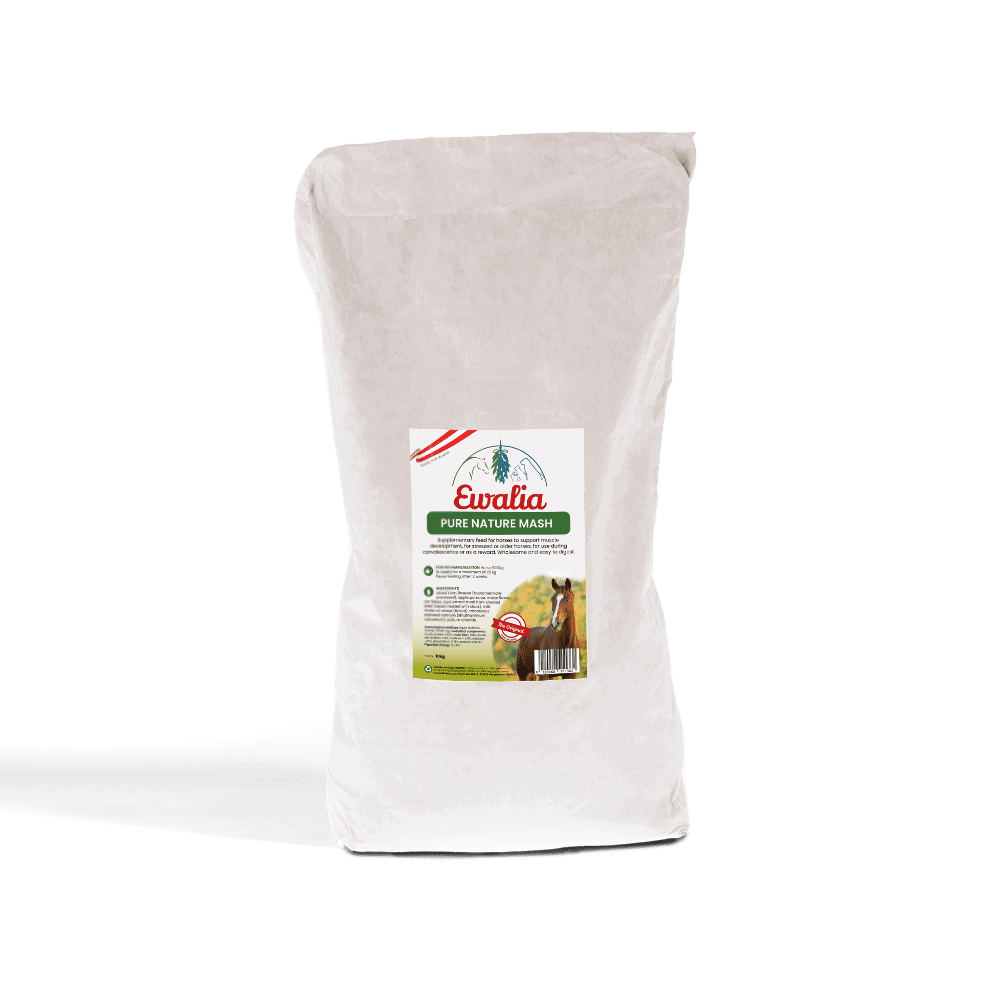
Warm mash meals or well-soaked hay cobs are particularly well suited during this phase. Mash, such as that offered by Ewalia, is an ideal source of easily digestible feed. It is prepared with hot water and fed as a lukewarm mash, which is gentle on the irritated esophagus and supports digestion. The mucilage in mash, often from flaxseed, can also help protect the inflamed stomach and intestinal lining. Make sure that mash and hay cobs are soaked for long enough so they fully swell and reach a thin, mushy consistency. During this recovery phase, avoid concentrated feed, hard carrots, bread, or fruit.


Prevention: How to avoid choke
Regular dental checks:
Have your horse's teeth checked by a specialized vet at least once a year, and treated if necessary. Only healthy teeth allow feed to be sufficiently broken down and moistened with saliva, which is the basis for smooth passage through the esophagus. As mentioned, the appearance of “hay wads” is a clear sign of dental problems and should be checked promptly.
Optimal Feeding Management
Feeds that swell, such as beet pulp and pellets, must always be soaked for long enough. Dried beet pulp should soak for at least 12 hours. Make sure all pieces are fully softened and swollen before you feed them.
For fast eaters, you can place a large, clean stone (e.g., a brick) in the feed trough. The horse then has to eat around the stone, which slows the eating pace and increases chewing activity. Feeding hay from small-mesh hay nets can also extend eating time.
Always feed forage (hay) first, before giving concentrate feed. This satisfies the worst of the hunger and stimulates saliva production, which improves the lubrication of the concentrate feed eaten afterward.
Split the concentrate feed ration into several small meals spread throughout the day, instead of feeding a large amount all at once. This prevents hasty eating and matches the horse's natural feeding behavior.
For susceptible horses, soaking the hay can also reduce the risk of choke.
Don't feed your horse in stressful situations, such as right after strenuous work or during excitement at a competition. Stress can cause the esophageal muscles to cramp. Provide a calm feeding environment and visually separate neighbors that compete over feed.
It's best to feed carrots and apples whole, to encourage the horse to chew thoroughly. Alternatively, they can be cut into very small pieces to prevent them from getting stuck sideways in the throat.
Recognizing and Treating Underlying Conditions
If choke occurs repeatedly despite optimal feeding and dental checkups, this is a clear indication of an underlying secondary cause. A comprehensive veterinary evaluation using endoscopy is then essential to identify anatomical features such as diverticula, strictures, or megaesophagus, as well as neurological disorders, and to treat them in a targeted way. Early diagnosis and appropriately managing these pre-existing conditions are crucial for the horse's long-term health and quality of life.
Conclusion
Choke in horses is an acute emergency that requires immediate and calm action. The unique anatomy of the horse's esophagus, which makes vomiting impossible, means that a blockage can quickly escalate into a life-threatening situation, particularly due to the risk of aspiration pneumonia.
Horse owners play a crucial role in quickly recognizing the characteristic symptoms, especially feed- and saliva-containing nasal discharge, and in taking initial, harm-reducing measures. Immediately contacting a vet is the most important step, since only professional medical intervention can safely resolve the blockage and prevent complications.
In the long run, prevention is key to your horse's health. Thoughtful feeding management that prevents hasty eating and properly prepares swelling feeds is just as essential as regular dental checks. Recognizing dental problems early, for example through signs like “hay wads,” can break a chain of events that might otherwise lead to choke. For recurring episodes, comprehensive veterinary diagnostics for secondary causes are essential to identify and treat the underlying issues.
Through responsible management and close cooperation with the vet, horse owners can minimize the risk of choke and sustainably safeguard their horses' quality of life.


Frequently asked questions💡
For problems/complaints: 👉 Here we recommend the course with 6 liters
At the beginning, we recommend feeding the increased amount (3 times the daily dose). Stay on the high dosage until an improvement occurs, plus 2 more days. Then feed 2 times the normal amount. If the improvement continues, feed the remaining bottles at the normal dosage. How much needs to be fed always depends on the individual problem, i.e. whether improvement occurs faster or not.
For prevention: 👉 Here we recommend the course with 3 liters
To prevent problems and support general well-being: preventively, meaning no increased amount, just the normal amount over at least three weeks.
Not sure if your horse will eat our products? No problem!We offer our EWALIA Eating Guarantee.
If your horse does not accept our products, you will get a full refund of the purchase price from us.How does it work and what do you need to consider?Simply send the products back to us within 30 days of purchase and fill out our form with the details of your order, a short, uncut video of your horse, and the proof of purchase.
If you purchased your EWALIA products from a retailer, contact the retailer directly within 30 days of purchase with your proof of purchase and video. They will refund the purchase price immediately.The Eating Guarantee can be used once per customer on products ordered for the first time.Per order, the guarantee applies to up to two different products.
You can find more information about our Eating Guarantee here in our terms and conditions: Eating Guarantee.
1. Better absorption and availability
Herbal liquids contain the active ingredients in dissolved form, which makes absorption in the body easier.They are often better tolerated, especially for animals with sensitive digestion or poor chewing ability (e.g. older horses or dogs).
2. Higher bioavailability
Due to the liquid form, nutrients and secondary plant compounds are absorbed into the blood more quickly, allowing them to take effect faster.Dried herbs must first be broken down in the digestive tract, which takes longer.
3. No dust exposure
Dried herbs can be dusty, which can be problematic especially for sensitive airways (e.g. horses with COPD or dogs with allergies).Herbal liquids are dust-free and therefore also suitable for animals with respiratory conditions.
4. Easier dosing & feeding
Herbal liquids can be mixed into feed more easily or given directly into the mouth.Especially with picky animals, the liquid form can be advantageous, as acceptance is often higher than with bitter-tasting, dried herbs.
5. No impact from inferior feed quality
Some dried herbs lose their active ingredients due to improper storage or contain fungi, mold, or contaminants.High-quality herbal liquids are freshly pressed and gently processed, so the ingredients are largely preserved.
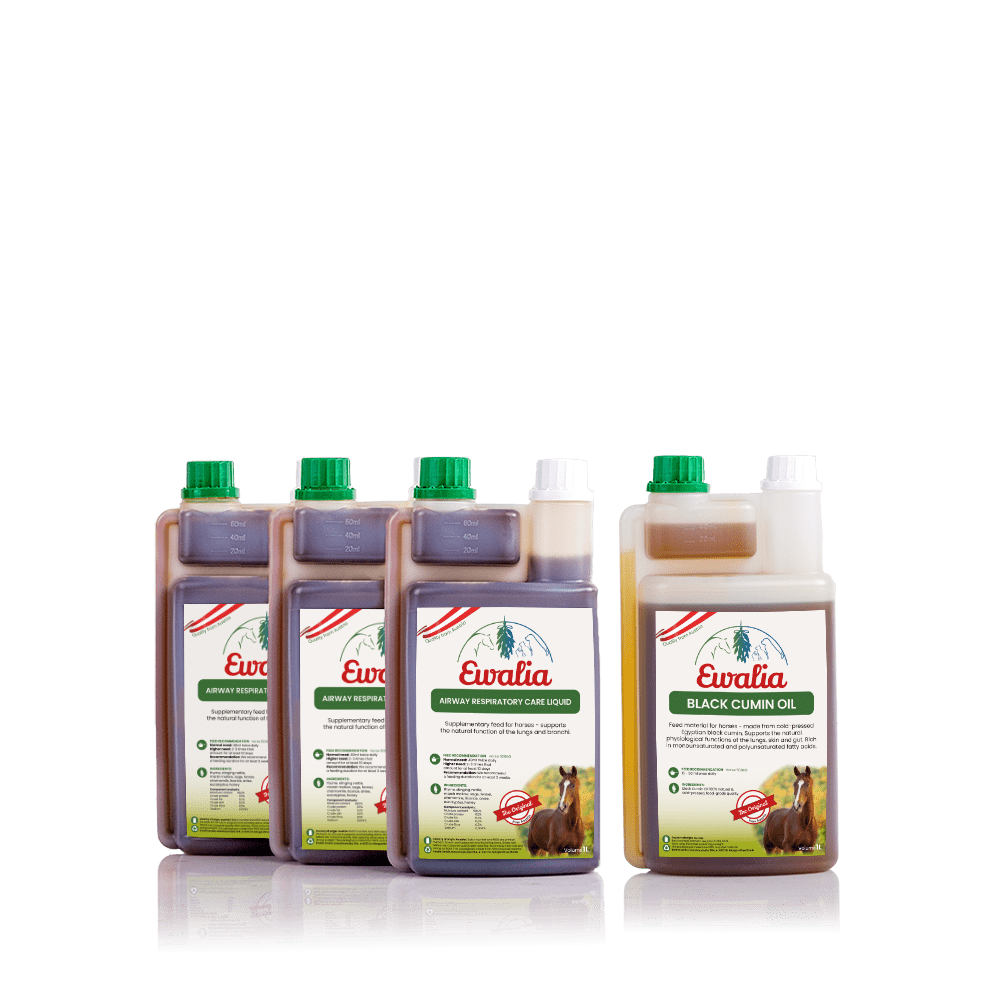
We recommend administering our product twice daily. This ensures that the body can optimally absorb the valuable herbal active ingredients. One option is to prepare the feed the evening before for the morning administration by the stable staff etc., as long as it is given within 24 hours (especially important in summer). Alternatively, one portion can be fed before and one after the riding session.
If twice-daily administration is not possible, we recommend giving 80% of the total daily dose to achieve the desired effect. For example, this would be 112 ml once daily for a total daily dose of 140 ml (70 ml + 70 ml). Our experience shows that regular twice-daily administration is the best option to fully realize the effectiveness of our products.
You can find all further questions in our 👉 FAQs
Our products serve as a supportive measure in the form of a complementary feed and do not replace veterinary examinations.
Yes, up to 3 Liquids can be fed at the same time.